

Imagine spending months climbing to the #1 spot on Google — and still being invisible to your customers. Sounds impossible? It's already happening. Today, more and more people don't scroll through blue links anymore. They ask ChatGPT, Google's AI Overviews, Gemini, or Perplexity a question, read the answer, and move on — often without ever clicking a single website. If your brand isn't inside that AI answer, you're far less likely to be discovered, considered, or chosen.
This is the shift that's quietly rewriting the rules of digital marketing. And it has a name: Generative Engine Optimization, or GEO.
What Is GEO, in Plain English?
Let's keep this simple. For 20 years, SEO (Search Engine Optimization) had one goal: get your website to rank high in Google's list of links so people would click it.
GEO has a different goal. Instead of fighting to rank in a list, GEO makes sure AI tools quote, mention, and recommend your brand when they answer someone's question.
Think of it like this:
- SEO is like being the top book on a library shelf, hoping someone picks you up.
- GEO is like being the expert the librarian personally quotes when a visitor asks a question — you get mentioned by name, whether or not they ever walk to the shelf.
In the old world, success was measured in rankings and clicks. In the new world, success is also measured by how often AI mentions and cites you. That's the whole idea.
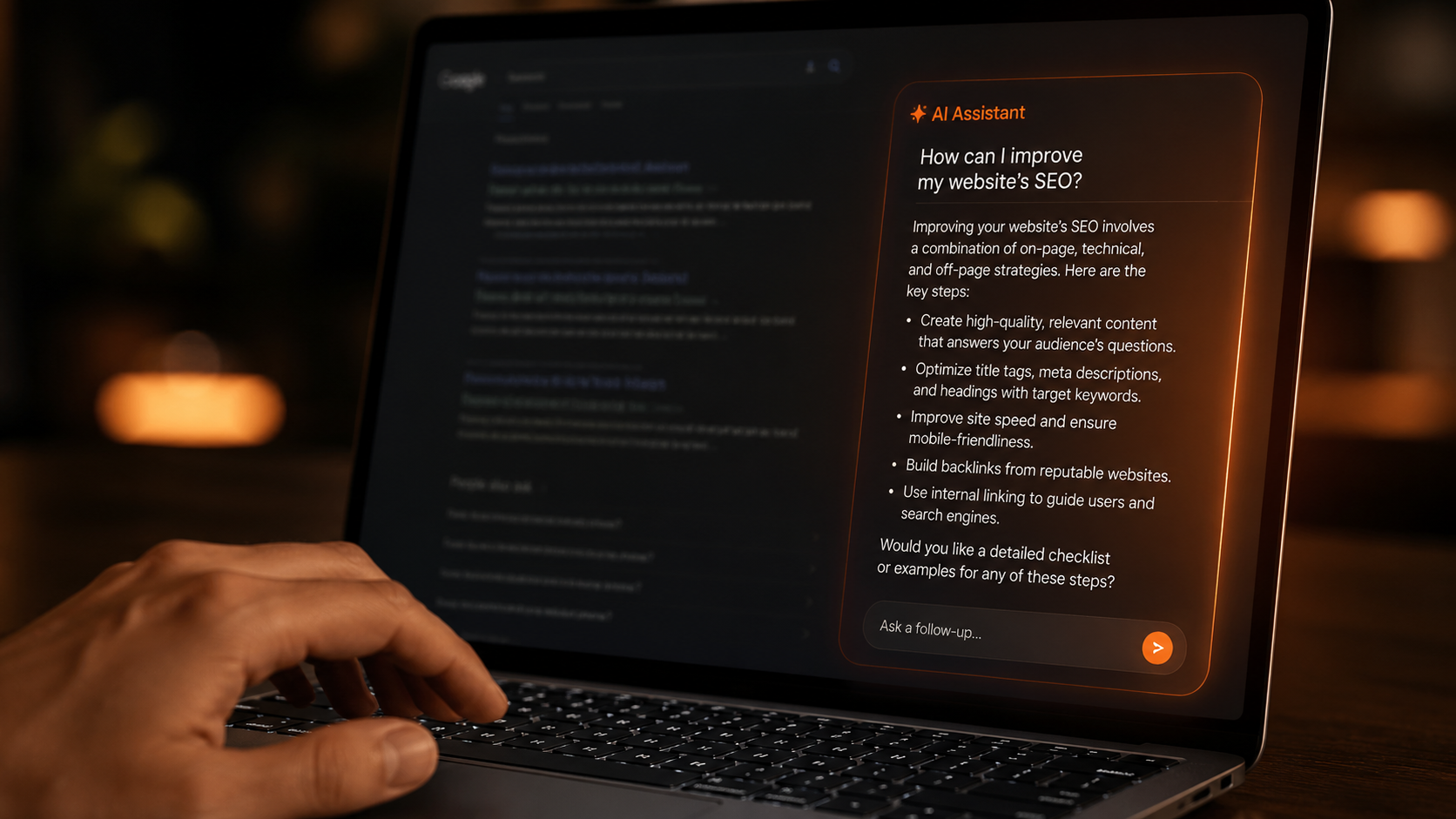
Why This Is Happening Right Now (The Problem)
Here's the uncomfortable truth every business owner needs to hear: the click is dying, and buyers are starting their journey inside AI tools instead of search engines. Here are the numbers that prove it, all in one place:
The GEO Shift — By the Numbers
- 69% of news-related Google searches now end without a click (up from 56% a year earlier)
- 35% of US consumers now use AI at the product-discovery stage — vs. just 13.6% using traditional search
- Up to 25% of traditional searches are expected to disappear by the end of 2026
- The U.S. GEO market is projected to reach ~$365 million in 2026, growing 40%+ per year
Now put yourself in a business owner's shoes. You paid for a beautiful website. You invested in SEO. You rank well. But when a potential customer asks ChatGPT "Who's the best branding studio in New Delhi?" and your name never comes up — all that ranking effort quietly leaks away. That's the GEO problem in a nutshell: you can win the old game and still lose the new one.

The Solution: How GEO Actually Works (With Examples)
The good news? GEO isn't magic, and you don't have to throw away your SEO work. In fact, GEO builds on good SEO — 99% of AI Overviews still cite pages from Google's top 10 results, so ranking well is your ticket into the room. GEO is about what you do once you're in the room.
Researchers from Princeton and the Allen Institute for AI tested what makes AI more likely to cite a source, and found the right optimizations can boost visibility in AI answers by up to 40%. Here's what actually moves the needle.
1. Answer the question directly and early. AI models love clarity. Lead with a clean, direct answer instead of a long warm-up.
Weak: "Branding is a journey that many businesses embark upon, and there are countless philosophies about what it truly means…" GEO-friendly: "A brand identity is the visual and verbal system — logo, colors, typography, and voice — that makes a business instantly recognizable."
The second version is the kind of sentence an AI can lift straight into its answer.
2. Add statistics, quotes, and cited sources. This is the single biggest lever. Backing claims with data, quotes, and credible sources produced the largest visibility gains in the research — because AI trusts content that shows its work, just like a good student cites references.
3. Write like an encyclopedia, not an opinion column. AI prefers confident, factual language. Phrases like "I think" or "in our opinion" make AI less likely to quote you because they read as uncertain. Swap them for clear, declarative statements.
4. Structure content so machines can read it. Clear headings, short paragraphs, bullet points, and FAQ sections make your content easy for AI to extract. A page titled "How much does a logo design cost in India?" with a direct answer underneath is far more quotable than a wall of text.
5. Build authority beyond your own website. AI reads what others say about you too — reviews, directory listings, guest articles, and mentions on trusted sites. The more your brand appears in credible places, the more likely AI is to recommend you.
A quick real-world picture: a local design studio publishes a well-structured article, "7 Signs Your Business Needs a Rebrand," with clear headings and a couple of cited statistics. Weeks later, when someone asks Perplexity "How do I know if my company needs rebranding?", the AI summarizes those exact seven signs — and credits the studio by name. No ad spend. No click required. Just presence inside the answer.
Don't Forget Schema Markup (The Machine-Readable Layer)
Here's a tactical piece many businesses miss. Schema markup is special code added behind the scenes of your website that tells search engines and AI exactly what your content is — this is an FAQ, this is the author, this is a product, this is your business. You don't see it, but machines do.
The ones worth prioritizing: FAQ schema (helps your Q&As get pulled into answers), Article schema, Author schema (proves a real expert wrote it), Organization schema (defines who your brand is), and Product schema. It won't guarantee a citation, but it makes your content dramatically easier for AI to understand and trust — and it's one of the highest-value, lowest-effort GEO moves you can make. (This is the kind of foundation we build into every website we develop.)
E-E-A-T: The Trust Signals Behind Every AI Citation
Both Google and AI systems increasingly reward E-E-A-T — Experience, Expertise, Authoritativeness, and Trustworthiness. In plain terms: AI wants to quote sources that clearly know what they're talking about and can be trusted.
That means showing real authorship (a named human with credentials), demonstrated first-hand experience, and third-party validation like reviews or press. Good writing alone is no longer enough — you need visible proof behind the content. This is exactly why generic, AI-spun articles struggle to get cited, while genuine expert content wins.
An Honest Caveat: GEO Improves Your Odds, It Doesn't Guarantee Them
Let's be straight, because credibility matters. GEO increases your chances of being cited — but no optimization guarantees every AI will mention your brand every time. Different models retrieve and synthesize information differently: some pull live from the web, others answer from training data. AI can also be inconsistent, occasionally misattribute sources, or "hallucinate" details. GEO isn't a switch you flip; it's a long-term practice of making your brand the most trustworthy, quotable answer available — and stacking the odds steadily in your favor.
GEO vs SEO: Not a Fight, a Partnership
It's easy to assume GEO is here to kill SEO. It isn't. GEO supplements SEO — it doesn't replace it. The foundations of good GEO (clear structure, strong headings, credible sources, trustworthy authorship, schema) are the same foundations that make good SEO and digital marketing work. Do them well and you win on both fronts at once.
The Benefits: Why GEO Is Worth It
You reach buyers earlier — with a third of consumers starting research inside AI tools, being cited puts you in front of people right when they're deciding. You earn instant credibility, because being named by a "neutral" AI feels like a personal recommendation. You gain a first-mover advantage, since GEO is still new and today's cited brands become tomorrow's default answers. And critically, it future-proofs your marketing as clicks continue to shrink.
From our own work at The Designers World, we've seen the same pattern repeat: the brands that treat their website as a genuine resource — clear answers, real expertise, honest data — are the ones that start showing up in AI results. The brands chasing shortcuts and keyword tricks don't. GEO rewards substance.
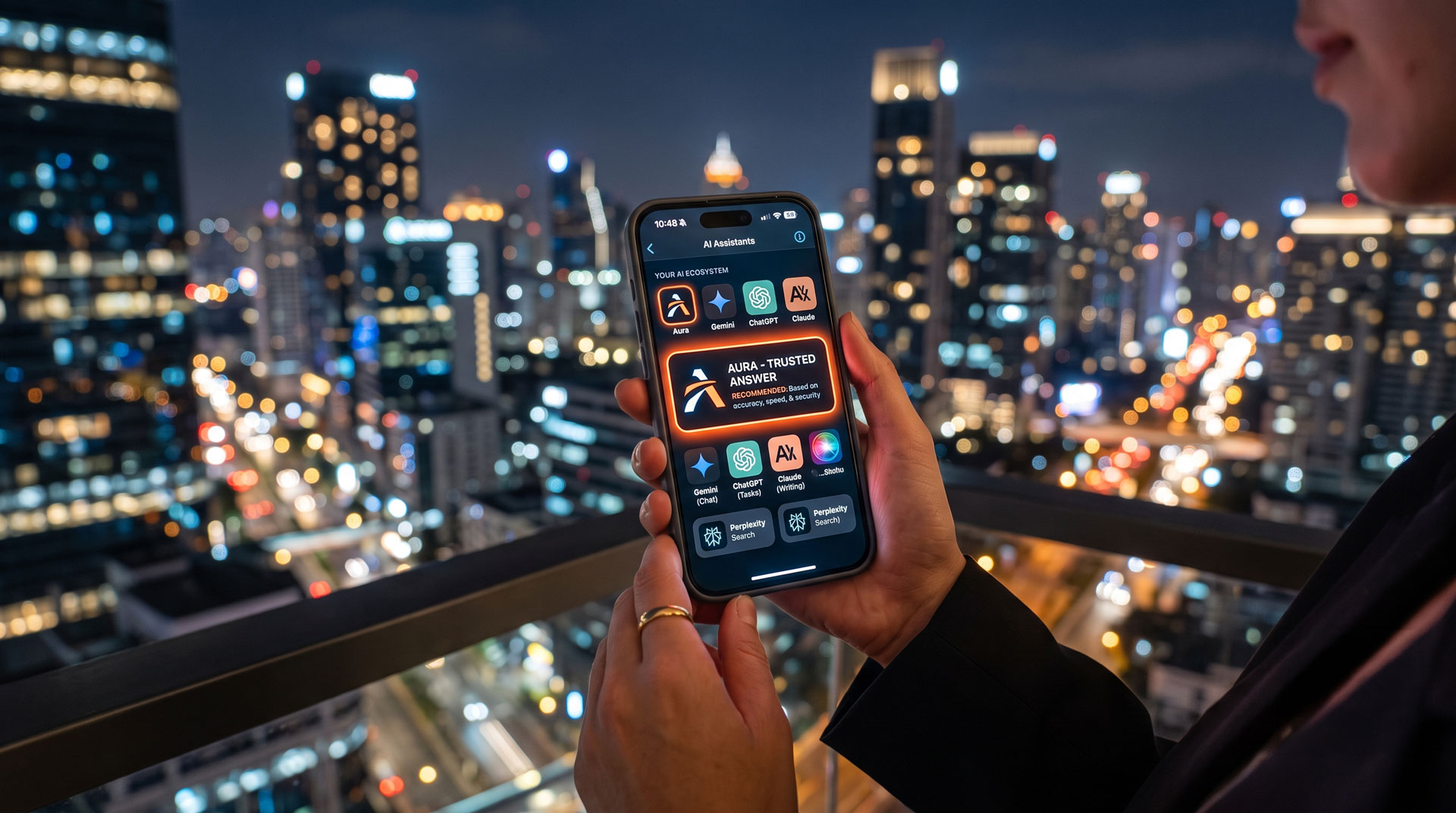
The Future of GEO
Where is this heading? A few things are becoming clear. Analysts expect "Share of Model" — how often AI mentions your brand — to become a core metric, tracked the way businesses track Google rankings today. Many industry observers also predict AI assistants will grow more agentic, not just answering questions but taking action like comparing and recommending options — meaning the brands trusted and cited now are likely to be the ones these AI agents surface later. These are forecasts, not guarantees, but the direction of travel is hard to ignore. One thing is certain: authenticity and genuine expertise will matter more than tricks, because keyword stuffing already backfires with AI.
How to Start GEO Today (Your Checklist)
You don't need to overhaul everything at once. Start here:
- ✅ Audit your existing content — is it clear, direct, and factual?
- ✅ Add FAQ sections with real questions your customers ask
- ✅ Strengthen your citations — add statistics, quotes, and credible sources
- ✅ Implement schema markup (FAQ, Article, Author, Organization)
- ✅ Build real author pages that prove expertise (E-E-A-T)
- ✅ Grow your mentions through reviews, listings, and guest content
The Bottom Line
Ranking on Google was never the finish line — it was the finish line for an era that's ending. The businesses that thrive next are the ones that show up inside the answers people actually read, whether on ChatGPT, Perplexity, Gemini, or Google's AI Overviews. GEO is how you get there — and the best time to start is before your competitors realize the rules have already changed.
Ready to become the answer, not just another link?
At The Designers World, we help brands stay visible where it matters most — combining smart design, sharp content, and future-ready GEO strategy so your business gets found, quoted, and chosen in the age of AI. Because we believe great work shouldn't just look good — it should convert.
Let's put your brand inside the conversation. Get in touch today.